
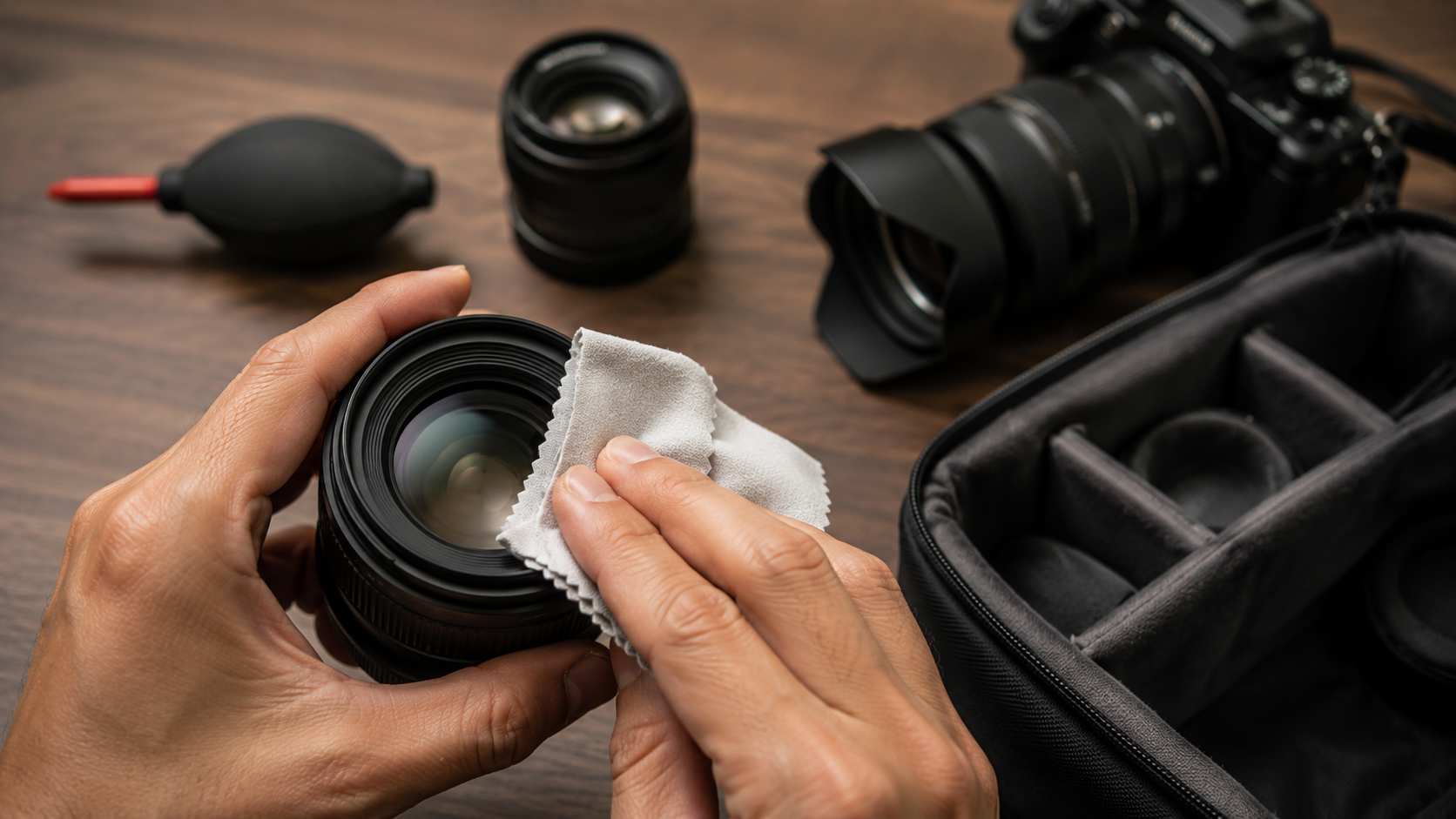
How Should You Clean and Store Your Lenses?
Most lens damage is caused by cleaning rather than by dirt. A small amount of dust does nothing to a photograph, and a scratched coating is permanent.
Focal length, prime versus zoom, maximum aperture and image stabilisation - and which of it matters for your pictures.
Most lens damage is caused by cleaning rather than by dirt. A small amount of dust does nothing to a photograph, and a scratched coating is permanent.
Mirrorless bodies will take almost any lens ever made with the right ring. What you gain is cheap and interesting glass, and what you lose is usually automation.
Independent lens makers have moved from being the budget option to producing some of the best glass available. The remaining differences are worth knowing before you save the money.
Most lenses are softest wide open, best around two or three stops down, and softer again at the smallest apertures. Two different physical effects are responsible.
Straight lines bowing outwards or pinching inwards is normal, expected and largely designed for. Whether to correct it depends on what is in the picture.
Plenty of lenses are labelled macro and only some of them are. The difference is magnification ratio, and it decides whether you can fill the frame with a small subject.
Wide lenses promise to fit everything in and frequently deliver empty pictures with stretched faces. The failures are predictable, which means they are avoidable.
Long lenses are bought for reach and kept for what they do to a composition. Knowing which of those you need decides how much you should spend and how long to go.
The cheap fifty millimetre prime is the most recommended lens in photography and one of the few pieces of advice that survives contact with reality. Here is what it does and where it falls short.
Two lenses of the same focal length can differ in price by a factor of ten. Most of that difference is aperture, glass quality and build, and only some of it will show in your photographs.
Stabilisation moves glass or the sensor to cancel out your own movement. It buys several stops of shutter speed, and there is one thing it can never do.
The second lens is the purchase that changes the most. Which one it should be depends entirely on what your kit zoom has been stopping you from photographing.